Case · 2022–2024 · Product Design Lead
Trust Wallet
A swap should never leave people guessing where their money is.
- The problem
- A swap asked people to let a contract spend a token and to exchange it, often without knowing they were doing both. Once funds left the balance, the screen didn’t say where they were.
- What I did
- Led the app’s design for the 2023 relaunch as Product Design Lead: approval as its own step, a swap you can follow, onboarding and backup redesigned, a next-generation proposal, shipped in phases.
- What happened
- Swap drop-off and support contacts fell. Funded wallets rose. The case gives their direction, not their size.
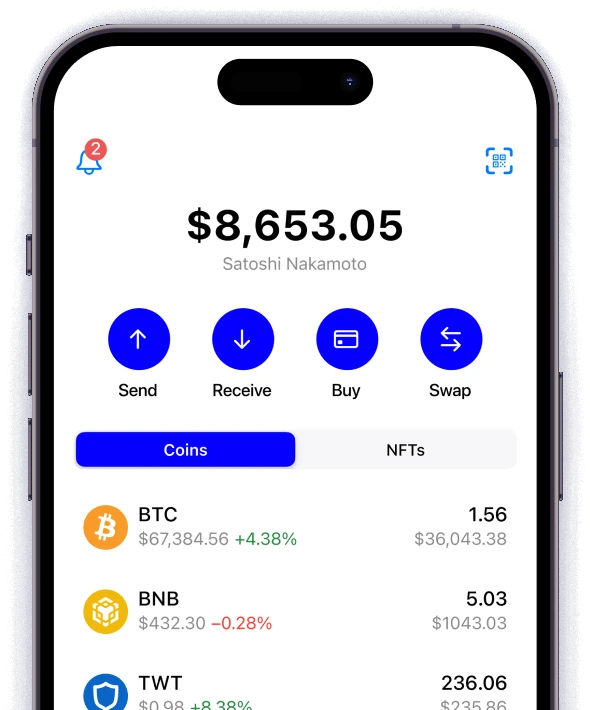
In 2023 Trust Wallet released a new brand and app for a wallet serving more than 80 million people. I led the app’s design as Product Design Lead, and designed its core journeys myself.
In its time
The year people took their keys back.
I joined in August 2022. Three months later FTX collapsed, and people who had kept their crypto on exchanges started moving it to wallets they controlled. Many arrived at Trust Wallet for the first time, without knowing what an approval or a secret phrase was. The redesign was for them.
2022
I join Trust Wallet, then part of Binance, as Product Design Lead.
FTX collapses. People leave exchanges, and Binance’s CEO points them to self-custody and Trust Wallet. Decrypt
2023
The new Trust Wallet: a new brand and app, released in phases. Trust Wallet
Binance Web3 Wallet launches inside the Binance app, with design led from the Trust Wallet team. Binance
Trust Wallet reports more than 80 million users. Trust Wallet
2024
I leave for Blum.
My workThe field
The problem
One button, two decisions.
A swap in a self-custody wallet asks people to do two different things, often without knowing it: let a contract spend a token, then exchange it.
Before the redesign we looked at support contacts, completed swaps, people who approved a token and never swapped, and gas and fee errors. The uncertainty started the moment funds left the balance: the screen didn’t say where they were or what would happen next.
The decision
Approval becomes its own step.
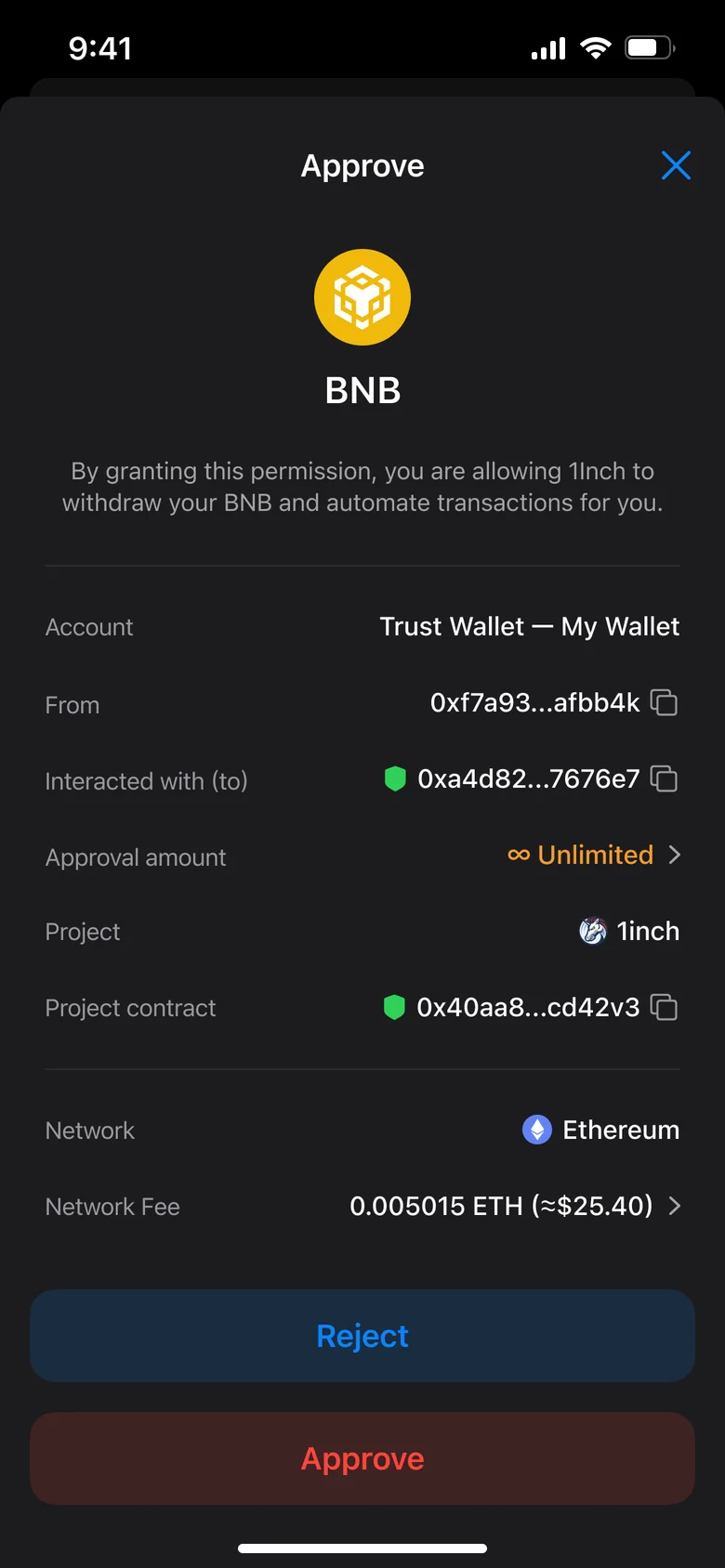
Token approval became a visible step instead of something folded into the exchange. The screen says it in words: who may withdraw what, how much, and what saying yes costs.
A one-tap swap looks faster. But when approval is invisible, a stalled approval looks like lost money, and nobody learns that a contract can now spend their tokens. Then progress you can follow: a status at every stage, haptics, and one clear final action. Nobody should need support to learn whether their swap worked.
Before the rebrand
A native iOS app, screen by screen.
Before the new brand, I redesigned the whole app to be native to iOS. Every screen is drawn with the system’s own parts: navigation bars, the tab bar, sheets, switches and keyboards. Each one exists in dark and in light.
There are 39 screens. They cover the first run, guest browsing and the passcode, the home, tokens and networks, swap, discover, WalletConnect, the dApp browser and settings. The prototype below runs them the way the app ran.
First run Intro 1
Introduction, 1 of 4: Private and secure. Private keys never leave your device. Swipe for the next one, or Get Started.
All 39 screens
The brand
From Trust Wallet to Trust.
The name was simplified to Trust, because the product had grown beyond a wallet. The purpose became Freedom Foundations. Light mode leads with blue and dark mode with green, so key actions reach AAA contrast in both, and more than forty illustrations draw everyday objects over their own grid, the brand’s idea of transparency. Before designing anything, Lovework’s team were each given $100 to invest, to use the product first-hand.
I worked on the brand from the product side from the start, and led its translation into the app: the components, the two themes, the icon and the motion people meet every day.
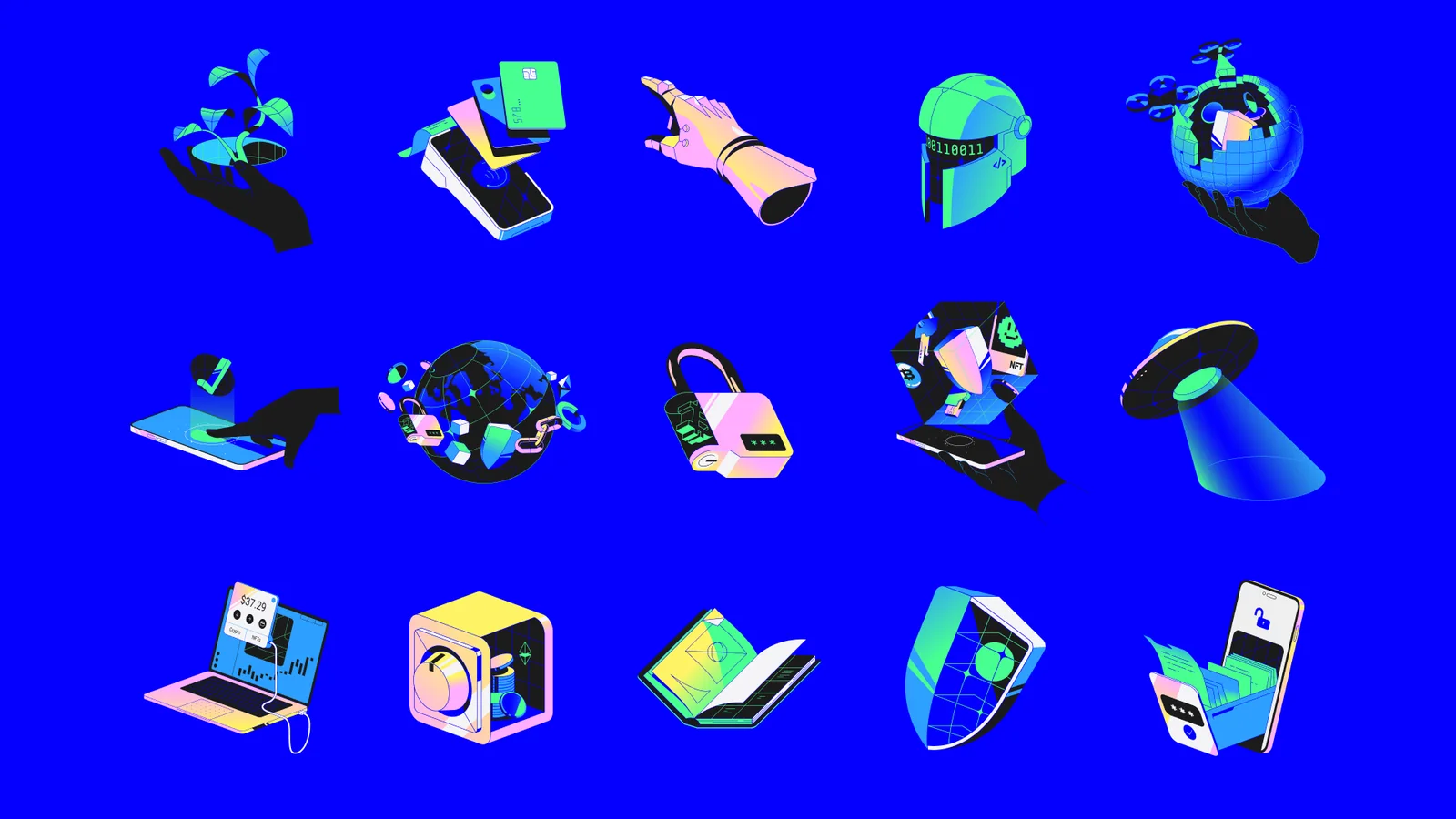
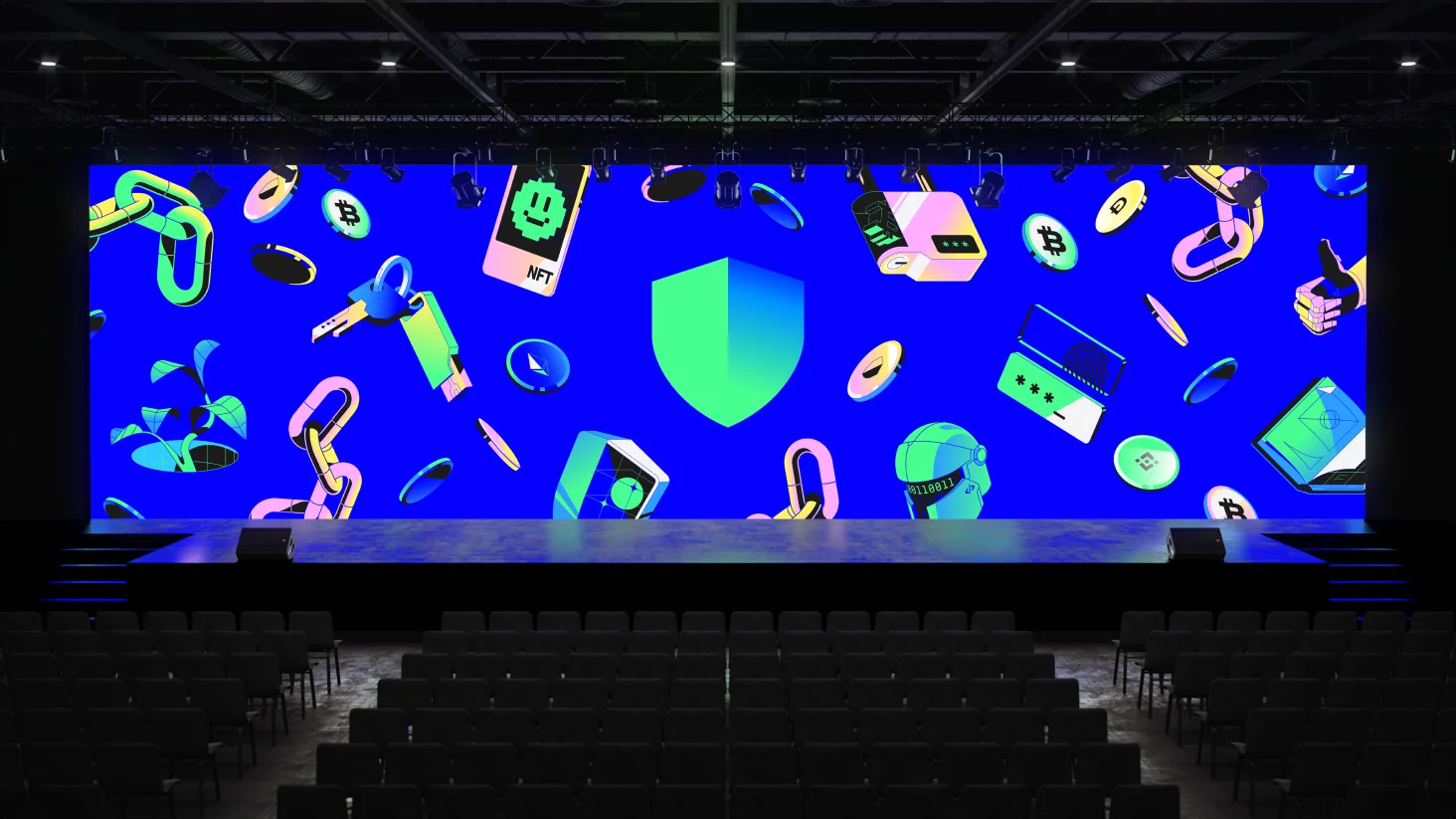
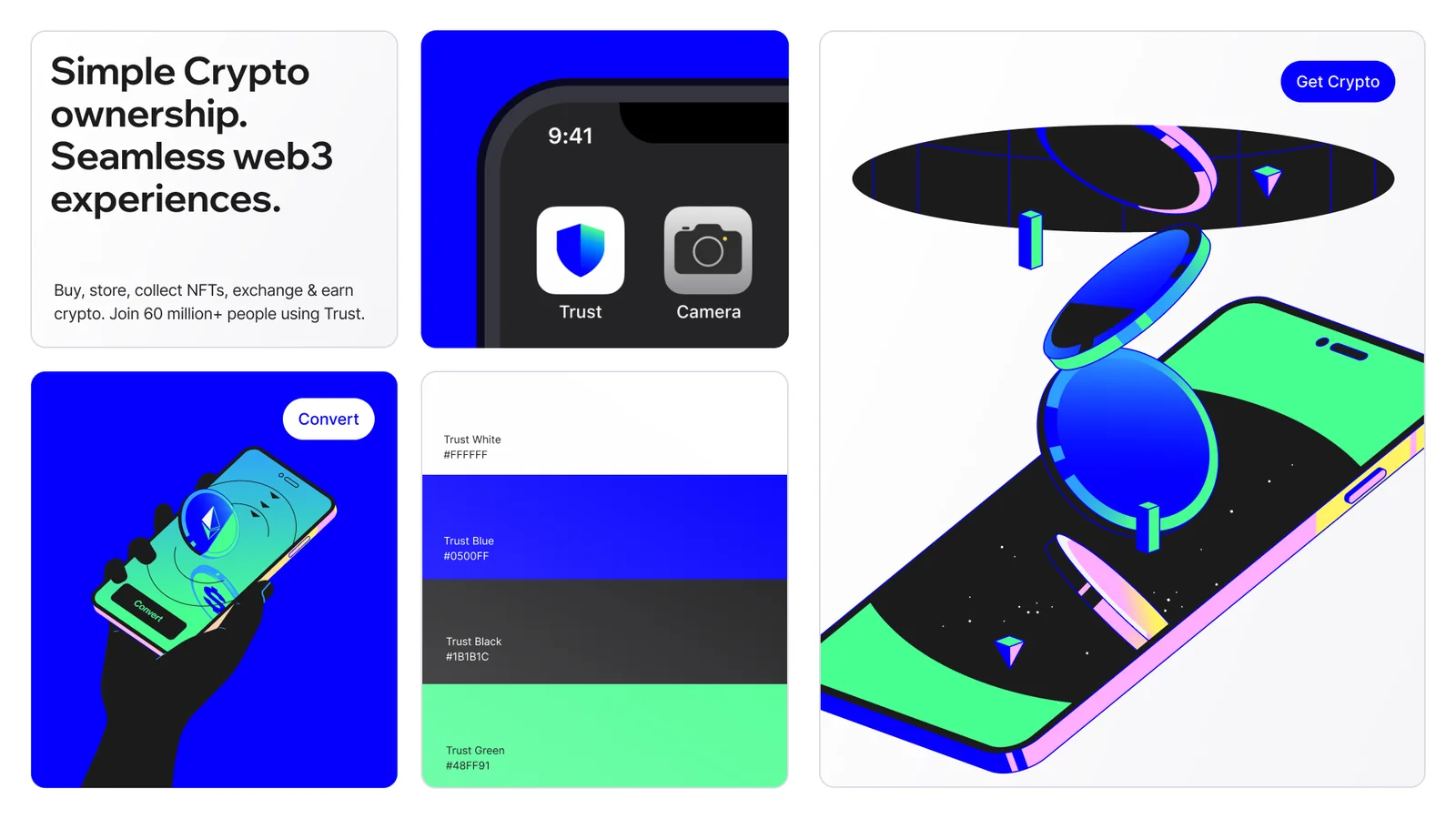
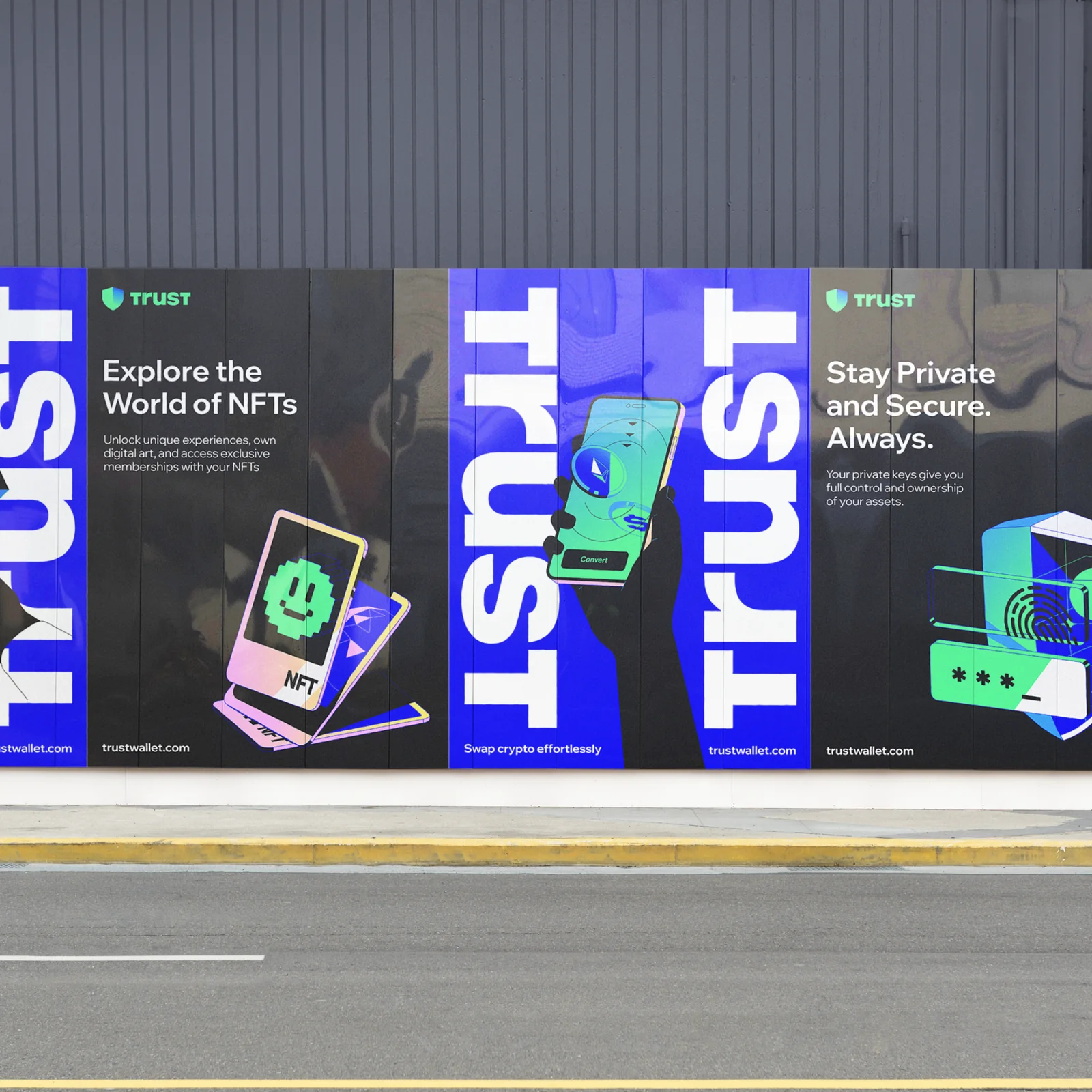
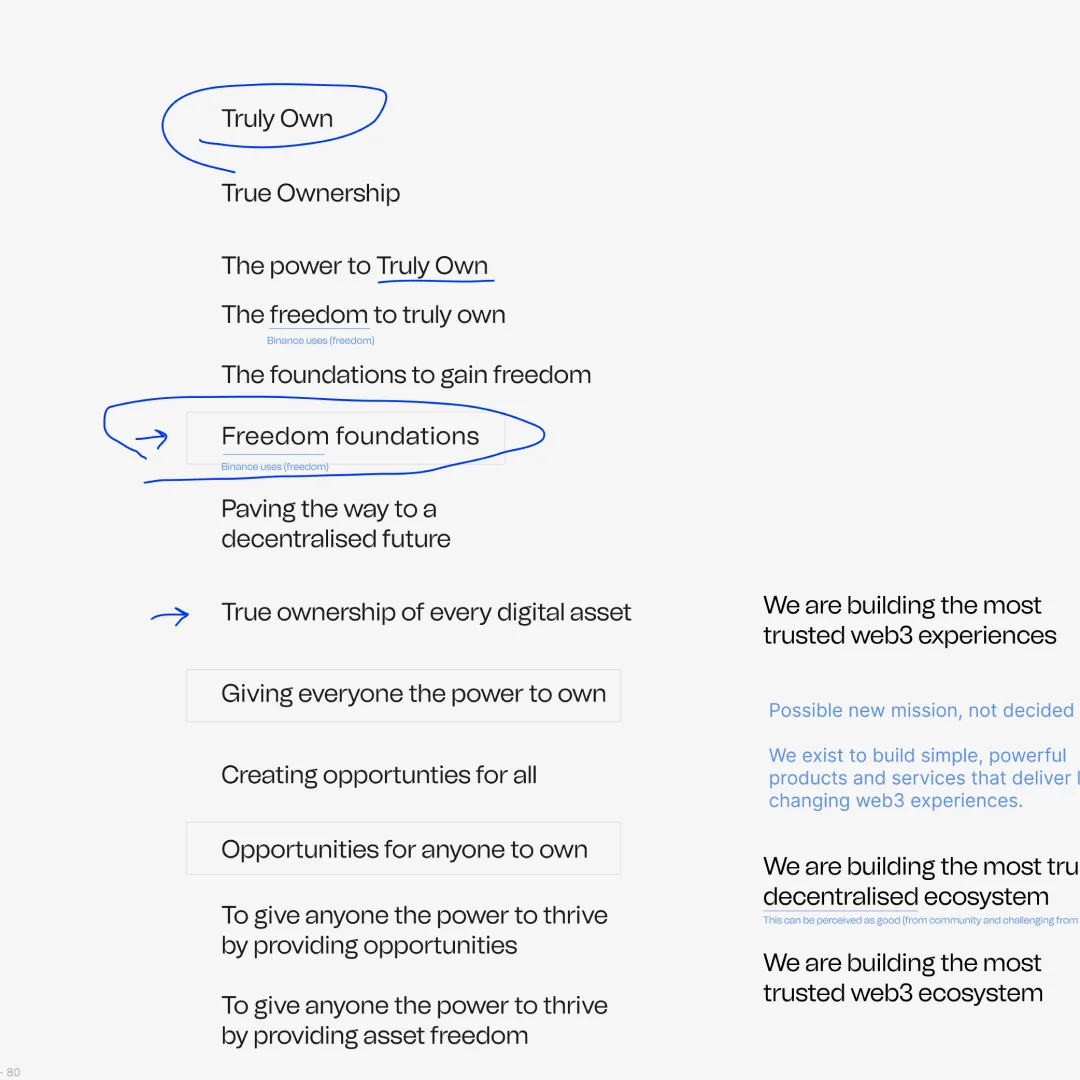
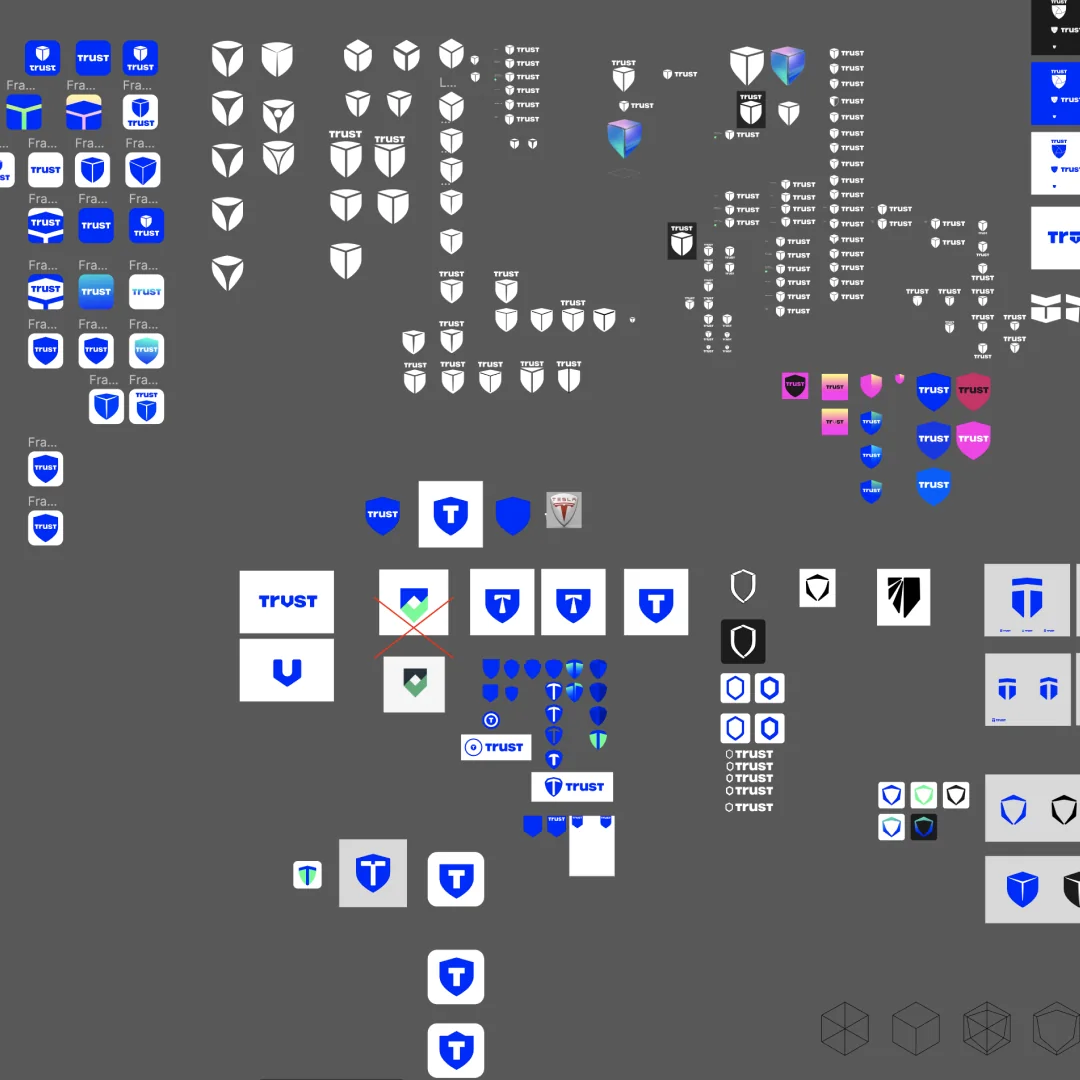
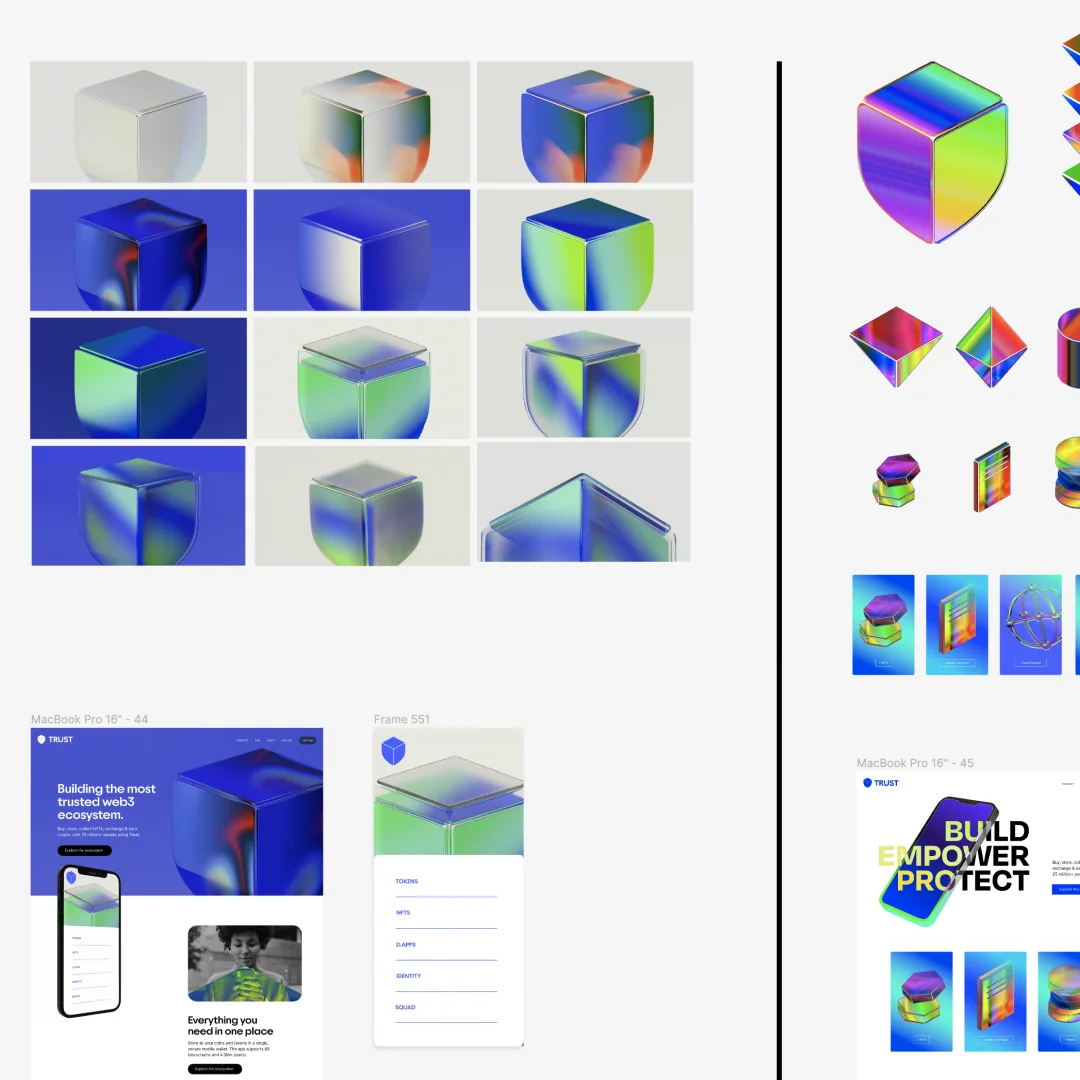
Brand by Lovework for Trust Wallet, 2023: creative direction Campbell Butler; account direction Robyn Butler; project management Charlene Chan; design Ashleigh Mackenzie, Lucinda Clark, Jason Wood and Wilson Leung; illustration Dmitrii Kharchenko; animation Mansur Amiri and Sam Vacquier.
Images and films from Lovework’s case, Trust. Product side of the brand led by me.
Onboarding
A wallet worth funding.
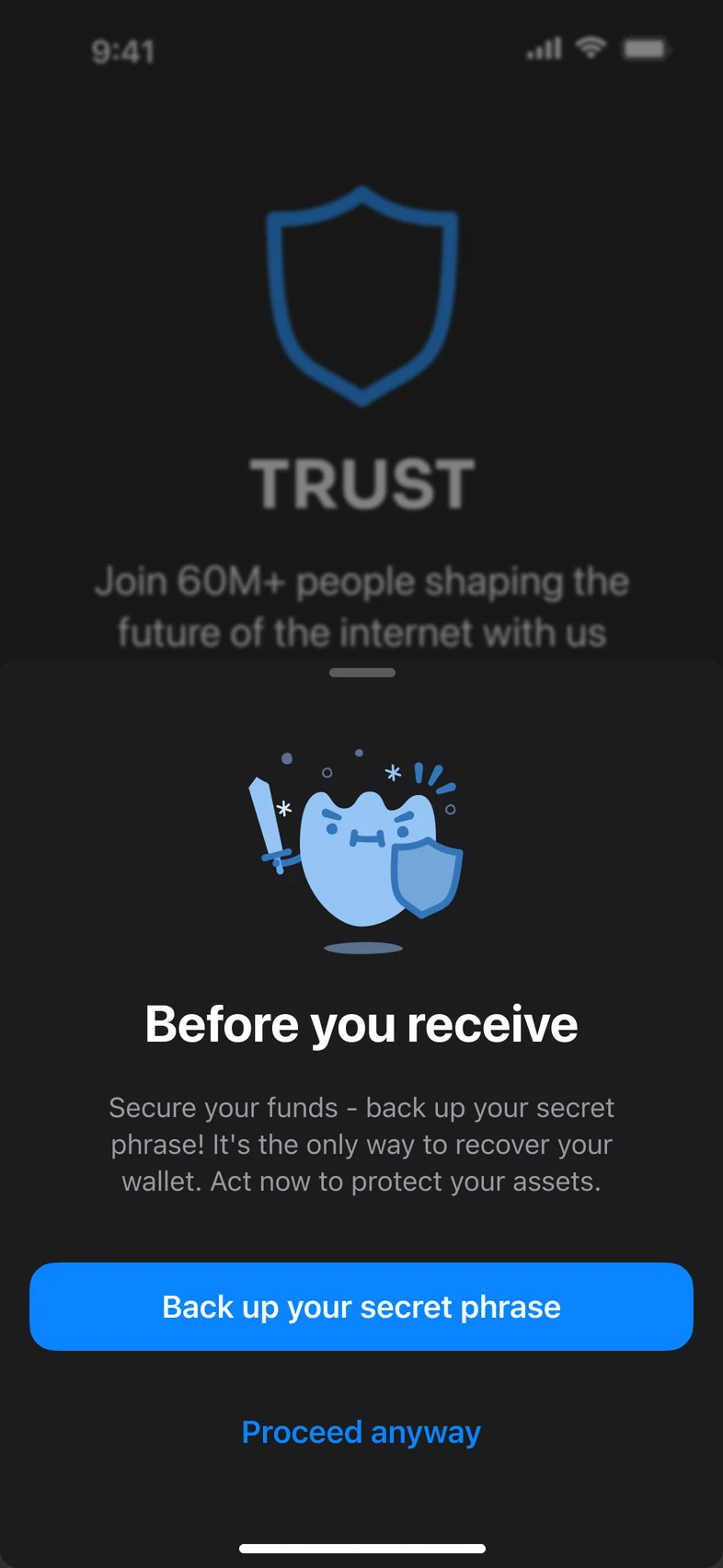
I redesigned onboarding and wallet creation, including the seed-phrase backup: the step people most want to skip and most need. A repeat confirmation is designed to feel like progress, not a test. After release we saw more wallets created and funded.
In the community-test design, backup returns right before funds arrive, when its consequence is concrete. It explains why it matters and keeps Proceed anyway: a reminder, not a gate.
The proposal
Learn by doing, not by reading first.
For the next generation I proposed moving onboarding inside the product. A guest can look around before creating a wallet. A new wallet’s home becomes a to-do list: back up your keys, customise the app, explore earning. Discover is organised by what people want to do, not by protocol, and the profile adds daily quests and small rewards.
It was presented to the team as a direction with an interactive prototype, for feedback and prioritisation, not as a shipped product.
Start Intro
The first screen: light falling through glass, and Get Started.
All 16 screens
Safety
Risk, in context.
With the security team I designed address-risk warnings and alerts on suspicious operations, working through real scam cases to decide when to interrupt and what to say. A warning only works if it appears rarely, at the right moment, and says what to do next. This went into Trust Wallet’s 2023 security features, including its scanner for malicious dApps.
Delivery
Ship the target in phases.
I built the case with data, competitor analysis and discovery with the CEO, CTO, engineers and product managers, then won backing with prototypes and estimates, tested with recruited users before building. Real-time quotes weren’t ready on the backend, so we cut the target into releases that each stood on their own.
Swap drop-off and support contacts fell. Funded wallets and swap-fee revenue rose. These are team results, and the ledger below gives each one’s direction against the app before the relaunch, not its size.
| Measure | Direction |
|---|---|
| Swap drop-off | Fell |
| Errors and support contacts | Fell |
| Wallets created and funded | Rose |
| Swap-fee revenue | Rose sharply |
The decisions
Three calls that shaped it.
- 01
Approval is its own step.
A swap asks for two things, permission to spend a token and the exchange itself. Each gets its own screen and its own yes, so nobody grants the first without knowing.
- 02
A swap you can follow.
Once funds leave the balance the screen says where they are and what happens next. The state in between is designed, not left blank.
- 03
Learn by doing.
The first run opens a wallet, and backup is asked for when there is something to lose. Risk is explained next to the action that carries it, not in a lesson before.
Binance
Next to the exchange.
The work ran alongside Binance. I led Trust Wallet’s design work on Binance Web3 Wallet, which launched inside the Binance app in November 2023.
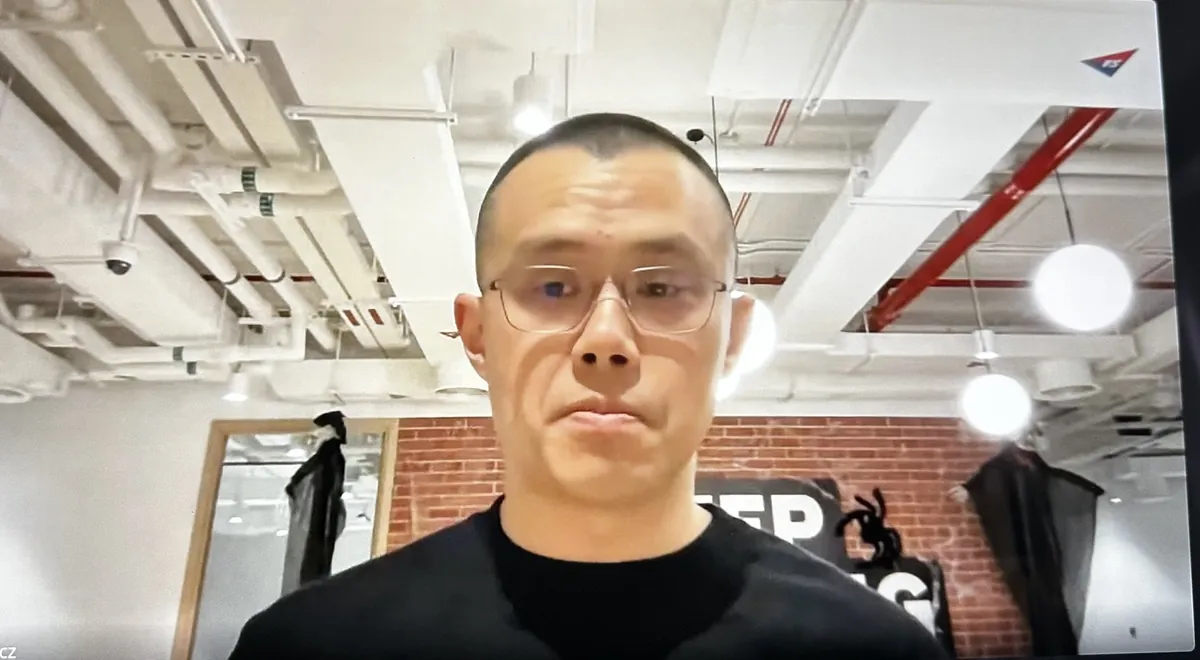
Left: Paris, 16 September 2022, walking with CZ and Yi He of Binance. Right: CZ on a company livestream on 31 October 2023, the month the new Trust Wallet shipped.
What lasted
Two decisions, two screens.
The new app shipped in 2023 with approval as its own step and a swap that reports where the money is. Those two screens are the shape of the question I keep designing: before software moves your money, what will it do, and what can it reach. In 2026 the software asking is an agent, and the answer still has to fit on one screen.
Credits
I led two product designers, who reported to me directly, and a marketing designer, with shared reviews across design. I hired the designer for SWIFT, whose first releases shipped under my management. ETH staking with Kiln was designed by another designer on the team.
Brand by Lovework; the product side of the brand led by me. Design system built with Trust Wallet’s engineers. Risk design with the security team.
Sources
- Trust Wallet: Introducing the new Trust Wallet, October 2023
- Trust Wallet: Your 2023 wrap-up, users and the year’s security features
- Lovework: Trust, the brand project
- Binance: Binance Launches Binance Web3 Wallet, 8 November 2023
Screens are from Trust Wallet working files and the 2023 brand guidelines, shown as portfolio work. Brand images and films are Lovework’s.